What Happens to the Tons of Waste Material in Mount Everest?
published on: 24th Sep, 2025
Sagarmatha Pollution Control Committee (SPCC)
Sagarmatha Next Experience Center
"Carry Me Back" initiative


published on: 24th Sep, 2025
Sagarmatha Pollution Control Committee (SPCC)
Sagarmatha Next Experience Center
"Carry Me Back" initiative
Mount Everest, the highest peak on Earth, stands as a beacon for adventure seekers and mountaineers worldwide. Every year, thousands of travelers take on the iconic Everest Base Camp Trek, drawn by the beauty and challenge of the Himalayas. However, amidst the thrill of conquering the summit lies a complex web of environmental challenges that often go unnoticed. In this blog, we delve into the lesser-known aspects of Everest's ecosystem and the initiatives undertaken to mitigate its environmental impact.
Every year, tens of thousands of visitors embark on the Everest Base Camp Trek itinerary, leaving behind a significant trail of waste. The staggering number of visitors, coupled with the lack of proper waste management infrastructure, has led to an alarming accumulation of trash in the region. A study estimated that during peak tourist seasons, over 4,000 kilograms of solid waste are generated daily, a figure that has likely doubled over the past decade.
At Mount Everest Base Camp, there aren't any regular toilets you might find elsewhere. Instead, people have come up with a clever solution. They use tents as a sort of bathroom. Below these tents, there are big drums covered with plastic. These drums can hold a lot of human waste, about 30 to 35 kilograms, before they need to be emptied. Once these drums are full, a group called the Sagarmatha Pollution Control Committee (SPCC) comes to collect the waste.
The Sagarmatha Pollution Control Committee (SPCC) makes sure the collected waste is disposed of properly, so it doesn't cause any problems. The Sagarmatha Pollution Control Committee (SPCC) charges 210 rupees per kilogram for collecting human waste. Additionally, they have set prices for other types of waste, such as plastic garbage, decomposable waste (like food scraps), and non-decomposable waste (like metal or glass).
To combat this issue, the Sagarmatha Pollution Control Committee (SPCC) has implemented various waste management strategies.
Climbing guides collect trash from higher camps and bring it down to base camp, where waste is meticulously sorted into degradable and non-degradable categories. Porters and yaks then transport the bundled waste to lower sites for further processing.
One innovative solution introduced by SPCC is the "Carry Me Back" initiative. Participants returning to the Lukla entry point are provided with small bags to collect trash, which is then transported back to Kathmandu for proper disposal. Additionally, waste materials are repurposed creatively, with artists in residence programs utilizing discarded trash for art and craft projects.
What goes up must come down: Before climbers begin their ascent of Mount Everest, they are required to make a deposit of USD 4000. This deposit is refundable but with a condition attached: climbers will get their money back only if they bring back at least 8 kilograms of garbage and trash from the mountain. It's important to note that empty oxygen cylinders and human waste are not included in this weight requirement.
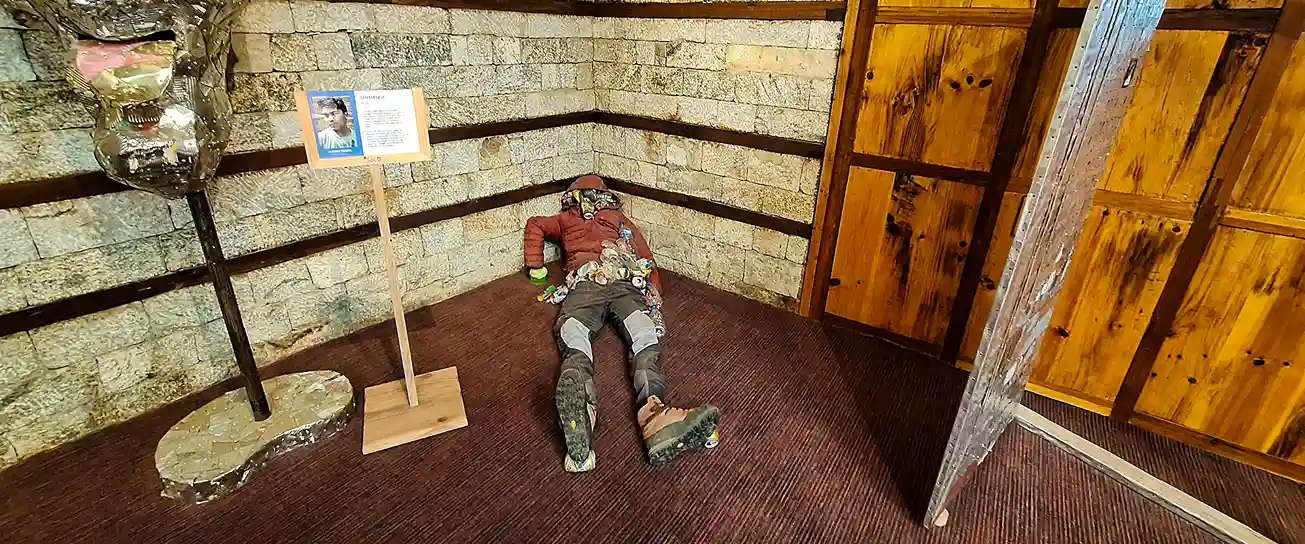
Some of the waste materials generated in the Mount Everest region find new life through creative endeavors. For instance, empty bottles are crushed, compressed, and molded to create miniature versions of Mount Everest's topography. This innovative approach not only reduces waste but also showcases the beauty of the region in a unique way.
Additionally, the Sagarmatha Next Experience Center plays a role in promoting sustainability and creativity through its Artist-in-Residence program. Artists participating in this program repurpose discarded trash into works of art. By doing so, they raise awareness about environmental conservation while highlighting the potential for beauty and creativity in recycling efforts.
Despite the continuous efforts of waste management in the Everest region, Everest's delicate ecosystem remains under threat. Research has shown alarming rates of glacier retreat, with one study revealing that Everest's highest glacier lost 200 years' worth of ice in just 25 years. Furthermore, the presence of over 100 dead bodies on the mountain poses both environmental and logistical challenges, with the removal of a single body costing a staggering $70,000.
Moreover, studies conducted on snow and stream water extracted from Everest have revealed concerning levels of microplastics, toxic heavy metals, and pathogens. These findings underscore the urgent need for sustainable practices and conservation efforts in the region.
In conclusion, while Mount Everest continues to allure adventurers from around the globe, it is imperative to recognize and address the environmental repercussions of human activity in the region. By promoting responsible tourism, implementing effective waste management strategies, and supporting conservation initiatives, we can strive towards preserving Everest's natural beauty for generations to come.
Inspired to trek responsibly? Travel with a registered trekking agency in Nepal, which prioritizes eco-friendly practices and helps protect Mount Everest for future generations.
Mount Everest generates thousands of kilograms of waste every year, especially during peak climbing seasons. Estimates suggest that over 4,000 kg of waste can be produced daily during busy periods.
Yes, over 100 bodies remain on the mountain due to the extreme difficulty and cost of recovery, which can reach up to $70,000 per body.
Pollution has led to microplastics, toxic chemicals, and pathogens being found in Everest’s snow and water. Additionally, glaciers are melting at an alarming rate due to global warming.
The Sagarmatha Pollution Control Committee (SPCC) plays a major role in managing waste, along with various government and conservation initiatives.
Trekkers can help by carrying their waste back, avoiding single-use plastics, following eco-guidelines, and supporting sustainable trekking practices.
We offer different tour types. You can also chat with a local travel specialist if you want a customized tour to Nepal.
Our travel experts are recommended by




14
Days
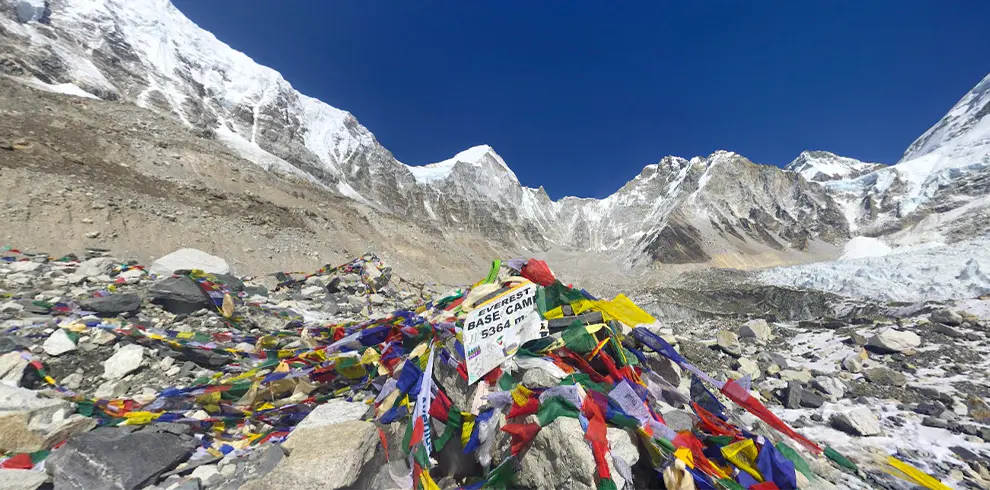
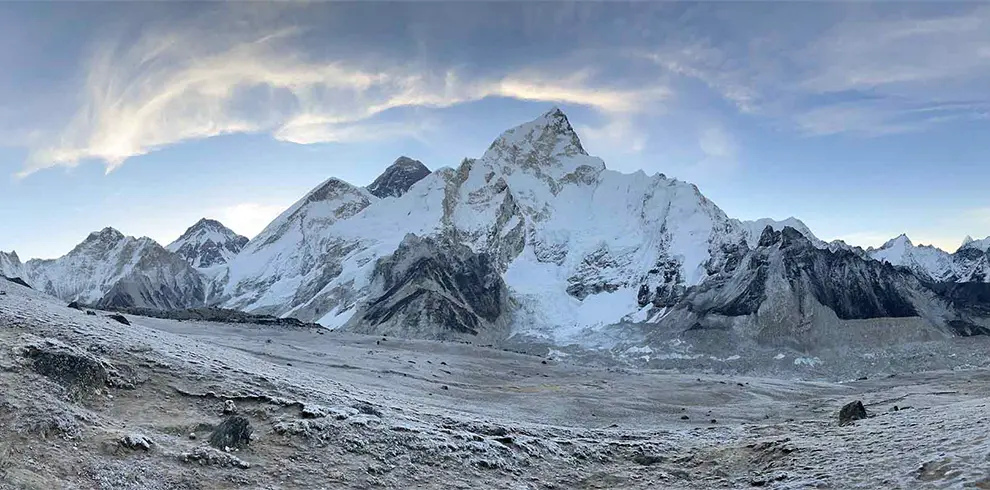
Everest Base Camp is a world-renowned trekking destination located in the Khumbu region of Nepal. Situated at an altitude of 5,364 meters (17,598 feet), the base camp provides stunning views of the world's highest peak, Mount Everest (8,848 meters /...
Start Journey

19
Days
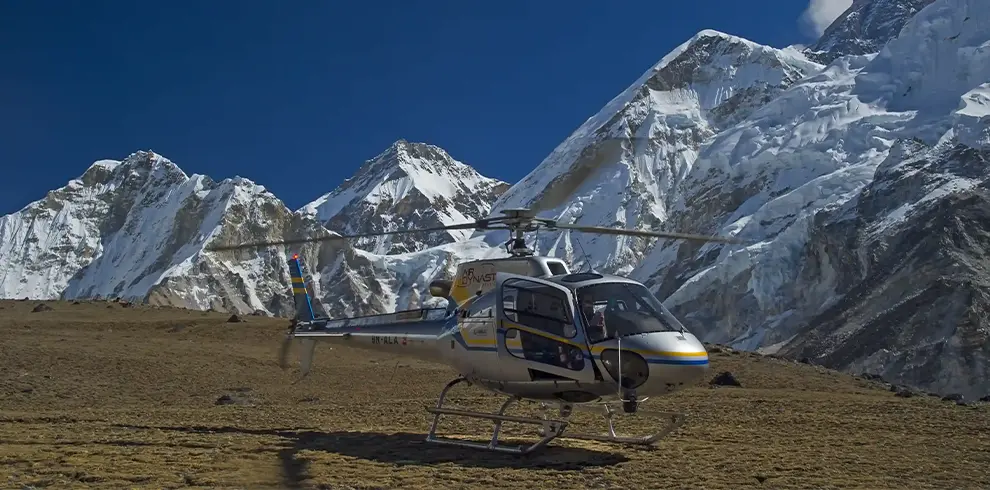
The Everest Three High Pass Trek is an ultimate adventure for experienced trekkers seeking a thrilling and challenging expedition in the Everest region of Nepal. This trek takes you on an epic journey across three high mountain passes: Kongma La Pass...
Start Journey
1
Days
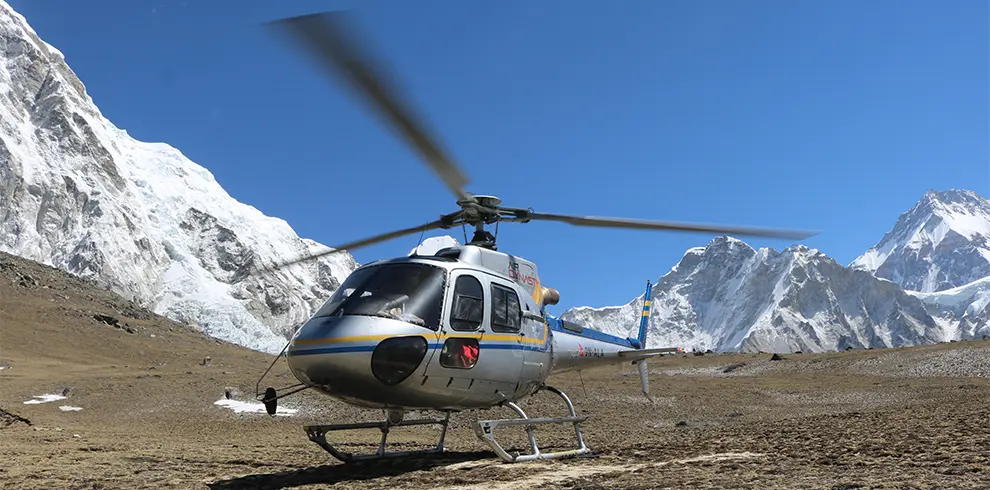
In the realm of unparalleled mountain grandeur, the One-Day Everest Base Camp Helicopter Tour stands as a testament to the epitome of adventure and luxury. This exceptional journey offers a unique opportunity to witness the majestic beauty of the wor...
Start Journey
10
Days
Why Book Everest base camp Trek with Helicopter return with Master Himalaya?Having assisted over 1000 travelers in the Everest Base Camp journey, we've observed that many enthusiasts, initially eager for the trek, may hesitate to return by foot after...
Start Journey