All the Information about Mera Peak Climbing
published on: 01st Jan, 2026
Mountain Climbing
Trekking
Nepal
Mera Peak
Himalayas
Summit Views
Climbing Seasons
Packing and Equipment Lists


published on: 01st Jan, 2026
Mountain Climbing
Trekking
Nepal
Mera Peak
Himalayas
Summit Views
Climbing Seasons
Packing and Equipment Lists
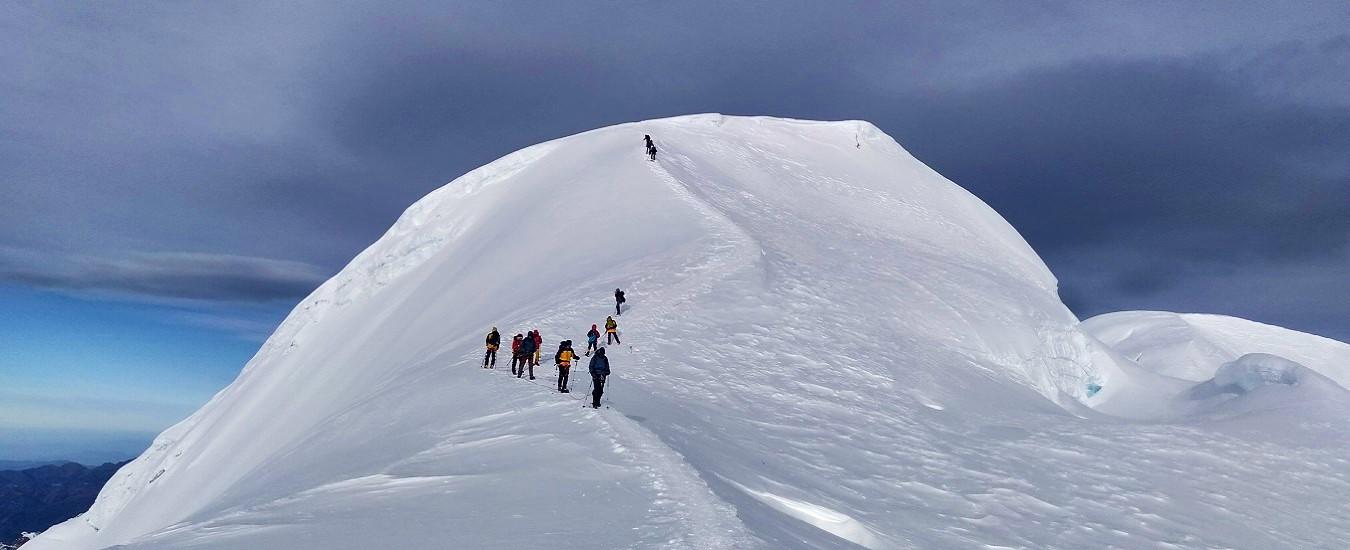
Mera Top is likewise one of the most famous and busy trekking peaks in Nepal. It offers exciting mountaineering experiences with a breathtaking view of the majestic Himalayan ranges. Being one of the technically mild-level mountain climbing peaks in Nepal, anyone with fundamental mountaineering skills, following professionals & proper guidance, can reach the summit of Mera Peak. So to provide additional information, we provide you with a complete guide to Mera Peak climbing. Geographically, Mera Peak lies in the Khumbu region of eastern Nepal. Mera Peak, which has three distinctive summits—Mera North [6,476 meters (21,247 ft)], Mera Central [6,461 meters (21,198 ft)], and Mera South [6,065 meters (19,898 ft)]—attracts a large number of climbers every year. Most climbers attempt the Mera Central Summit, which is comparatively less challenging than the other two.
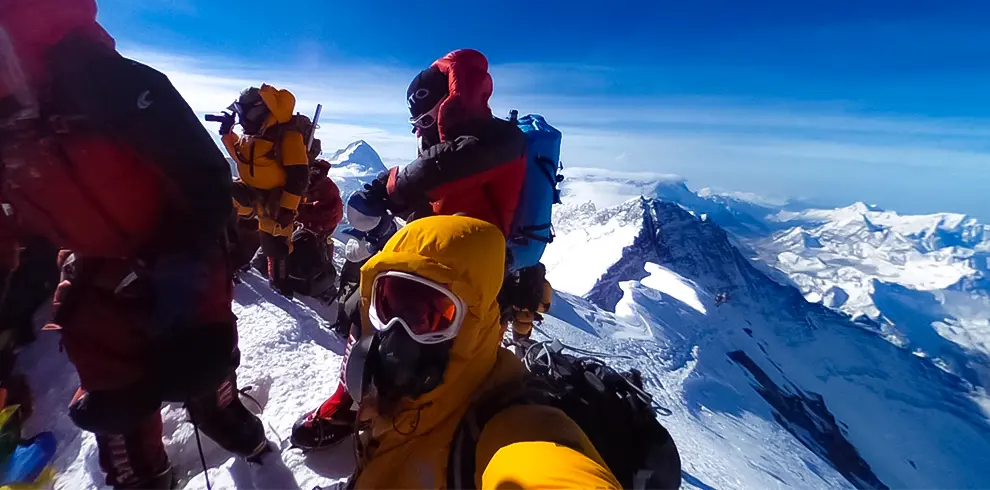
Mera Peak is classed as the highest trekking peak in the world, with an altitude of 6,476 meters (21,247 ft). From the summit, climbers can witness five of the world’s highest mountains above 8,000 meters, including Mount Everest, Kanchenjunga, Lhotse, Makalu, and Cho Oyu.
Day 1: Arrival at Kathmandu Airport
Day 2: Walking excursion at Kathmandu and trekking guidance.
Day 3: Kathmandu to Lukla flight and uphill hike until Chhuthang
Day 4: Chhuthang to Tuli Kharka Trek, crossing Zatrawala Bypass.
Day 5: Tuli Kharka to Kothe
Day 6: Trek to Thangnak
Day 7: Thangnak to Khare
Day 8: Rest and acclimatization day at Khare
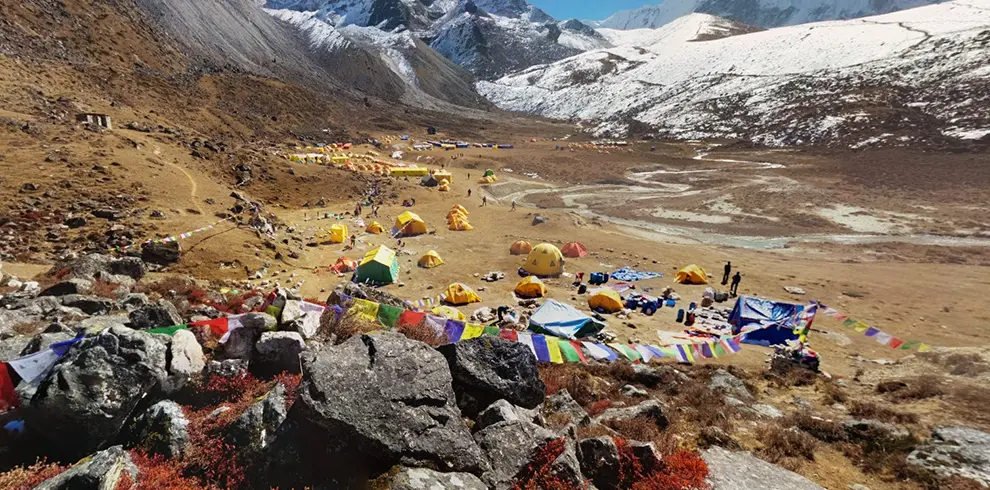
Day 9: Hike to Mera Base Camp
Day 10: Trek to High Camp
Day 11: Summit Day and descent to Khare
Day 12: Reserve/contingency day
Day 13: Return to Kothe
According to our experts, the best time for Mera Peak climbing is during spring (March, April and May) and autumn (September, October and November). Both seasons offer stable weather conditions, moderate temperatures, and clear mountain views. The spring season lets you into nature with complete blossoms of rhododendron forests & green flora alongside the trek. The vision you’ll get from the summit is fantastic. Late April can also be a favored time for climbing Mera Peak.
The fall season also offers nearly perfect weather conditions. During this time, visibility is significantly better than in any other season in Nepal. Trekkers swarm popular hiking trails such as Everest Base Camp, Annapurna Base Camp, and Manaslu Circuit. Likewise, many climbers come for mountaineering expeditions as well. October and November are highly preferred months for trekking.
As mentioned earlier, Mera Peak offers three unique routes and the required permits correspond to these routes. However, the information is that the course we observe calls for only two activities: TIMS & top mountain climbing.
The price for TIMS is constant at NRS 1,000. However, mountain climbing expenses vary in keeping with the season.
Right here are the Mera Peak permit fees in step with seasons:
Mera Peak is classified as a trekking peak in Nepal, meaning the journey involves both trekking and basic mountaineering. Compared to other climbing expeditions, Mera Peak does not require advanced technical climbing skills or complex equipment. Therefore, based on its difficulty level, Mera Peak is considered a technically straightforward climb because the ascents are uncomplicated.
However, the difficulty of Mera Peak depends on several factors:
Among the three distinct summits of Mera Peak, Mera North is the highest and most difficult. Mera South is the lowest and mildest summit, while Mera Central is considered the most ideal option. Although hundreds of climbers summit Mera Peak every year, fatalities are extremely rare when climbed with proper acclimatization and professional support.
Proper preparations are a dominant factor for a successful summit of Mera Peak. Even though the height is technically easy, you should not be careless while choosing gears.
We provide all the essential climbing equipment required for summiting Mera Peak. We inspire you not to bring any of the climbing tools & system yourself. However, there is no restriction on this. You are welcome to bring and carry your own climbing tools for your personal comfort if you wish.
The packing list and equipment list for Mera Peak climbing are listed below:
The trail to Mera Peak passes through the remote areas of the Khumbu region. This is why teahouses are the preferred choice for meals and accommodation. Instead of expecting to find suitable or luxury motels in Kathmandu and Lukla, anticipate using teahouses during the experience.
However, teahouses meet the food and lodging needs of all trekkers and climbers. Regarding inns, you will be provided with rooms based on twin sharing, as it is difficult to secure a single room in these mountainous areas. In addition, you’ll no longer discover an exceptional choice in the meals menu.
Note: There are no teahouses at Mera Base Camp & High Camp for lodging. We can set up a camp for a single-day stay and additionally, our crew will serve you hot, delicious meals.
Mera Peak climbing is considered a moderate trekking peak expedition in Nepal. Technically, climbing Mera Peak does not involve steep ice walls or advanced mountaineering skills, but the high altitude of 6,476 meters makes it physically demanding. The main difficulty of Mera Peak lies in altitude adaptation rather than technical climbing. With proper acclimatization, professional guides, and basic mountaineering training, most climbers can successfully summit Mera Peak.
A standard Mera Peak climbing itinerary takes 16 to 18 days, including trekking, acclimatization days, summit push, and contingency time. The duration allows climbers to safely adjust to high altitude while trekking through the remote Khumbu region of Nepal. Shortening the itinerary is not recommended, as proper acclimatization is essential for a safe Mera Peak expedition.
Yes, Mera Peak is generally harder than Mount Kilimanjaro. While Kilimanjaro is a high-altitude trek, Mera Peak climbing involves glacier travel and the use of crampons, ice axes, and rope techniques. In addition, Mera Peak is higher than Kilimanjaro, making altitude management more challenging. However, Mera Peak is still considered one of the easier Himalayan climbing peaks for beginners.
Most climbers do not require supplemental oxygen to climb Mera Peak. With a well-designed acclimatization schedule, climbers can safely summit without oxygen. However, professional Mera Peak climbing operators usually carry emergency oxygen as a backup in case of altitude sickness during the expedition.
Yes, Mera Peak is officially recognized as the highest trekking peak in Nepal, standing at 6,476 meters (21,247 ft). From the summit of Mera Peak, climbers can enjoy breathtaking views of five 8,000-meter mountains: Mount Everest, Lhotse, Makalu, Cho Oyu, and Kanchenjunga—a major highlight of this Himalayan peak climbing adventure.
The best time for Mera Peak climbing is during spring (March–May) and autumn (September–November). These seasons offer stable weather, clear visibility, and safer climbing conditions. Both spring and autumn, with their warmer temperatures and blooming landscapes, offer ideal conditions for a successful Mera Peak expedition.
Island Peak is technically more difficult than Mera Peak. Island Peak climbing involves steeper ice walls, ladder crossings, and advanced rope skills. Mera Peak, on the other hand, is higher but technically easier, making it a preferred choice for climbers seeking their first Himalayan peak climbing experience in Nepal.
When planning Mera Peak climbing in Nepal, choose a licensed operator with experienced guides, strong acclimatization plans, proper climbing equipment, and emergency rescue support. A reliable peak-climbing agency ensures safety, handles permits, manages logistics, and provides expert guidance throughout the Mera Peak expedition.
Preventing altitude sickness during Mera Peak climbing requires gradual ascent, scheduled acclimatization days, proper hydration, and avoiding alcohol. Listening to your body and following your guide’s advice are crucial. Immediate descent is the best treatment if symptoms worsen during high-altitude climbing in Nepal.
Common high-altitude problems during Mera Peak expeditions include headaches, nausea, fatigue, shortness of breath, and sleep disturbance. Ignoring acclimatization can lead to severe conditions like AMS, HAPE, and HACE. High-altitude risks significantly decrease under professional supervision.
During Mera Peak climbing, emergency communication is managed through satellite phones, local mobile networks where available, and coordination with rescue teams in Nepal. In serious cases, helicopter evacuation can be arranged from high camps. Climbers should have travel insurance covering high-altitude helicopter rescue for Mera Peak expeditions.
Mera Peak is not dangerous when climbed responsibly with proper acclimatization and professional support. Most risks are altitude-related rather than technical. With experienced guides and a well-planned itinerary, Mera Peak climbing remains one of the safest high-altitude climbing options in Nepal.
We offer different tour types. You can also chat with a local travel specialist if you want a customized tour to Nepal.
Our travel experts are recommended by




64
Days
The expedition typically follows a well-established itinerary, allowing for proper acclimatization and strategic placement of high-altitude camps along the route. These camps serve as rest and acclimatization points, providing climbers with the neces...
Start Journey

10
Days
Embark on an extraordinary 8-day journey through the Khumbu region of Nepal with the Amadablam Base Camp trek. This exclusive adventure promises an experience like no other as you explore the mesmerizing landscapes and witness the grandeur of Mount E...
Start Journey
18
Days
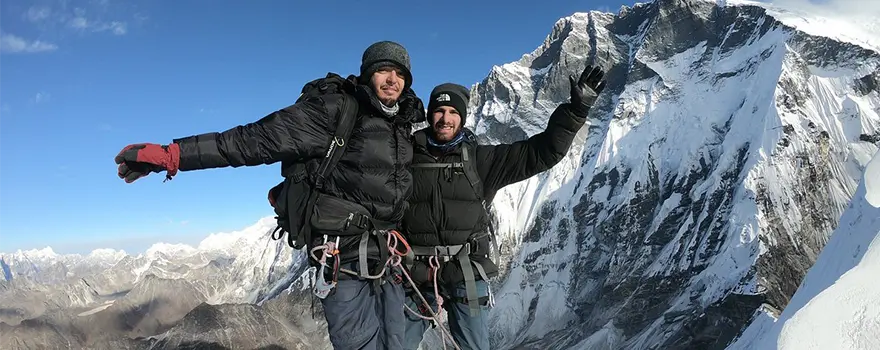
Island Peak, also known as Imja Tse, is one of the most popular trekking peaks in Nepal. Standing at an impressive altitude of 6,189 meters, it offers a thrilling climbing experience and breathtaking views of the surrounding Himalayan peaks. Island P...
Start Journey